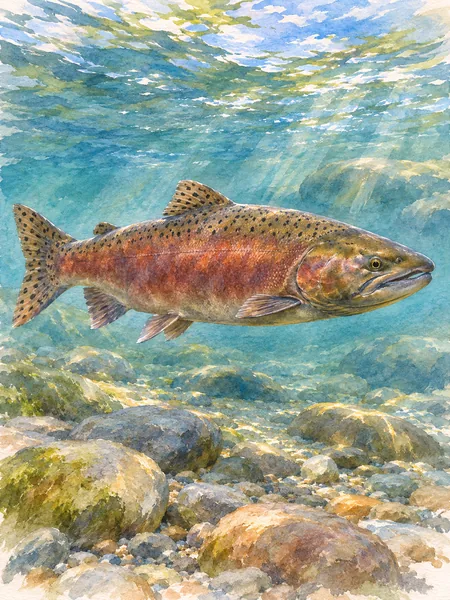
Pacific salmon
Chinook Salmon
The great traveller of British Columbia's rivers
Read the profile
Collection No. 02
Along British Columbia’s coast, Pacific salmon swim inland to spawn in streams shaded by alders and conifers. Their return feeds bears and eagles and brings nutrients from the ocean into the forest.
Listen to the overview · 1:52
Audio is temporarily unavailable. The transcript is below.
Look beneath the ripples of a forest stream on British Columbia's coast. A salmon holds in the current, its tail moving just enough to keep it in place. It grew at sea. Now it's back in fresh water, working its way upstream to spawn.
On the gravel, a female sweeps stones aside with her tail to make a nest. After her eggs are fertilized, she covers them with gravel. They develop in the spaces between the stones, where water moving through the streambed brings them oxygen.
Along the bank, red alders shade the stream. When their leaves fall into the shallows, some caddisfly larvae feed on them. Young fish eat those larvae, and so do American dippers. Watch for a small grey bird on a wet rock. It may bob a few times, then slip beneath the surface to hunt.
A black bear may catch a salmon in the shallows and carry it into the woods. Pacific salmon die after spawning, and a bald eagle may feed on one left on a gravel bar. As the remains break down, nutrients the fish gathered at sea enter the stream and the forest soil.
The timing of the trip to the ocean varies by species. Young coho, for example, may spend a year or more in fresh water. A quiet pool along the edge of the stream can give them shelter from the faster current. Young chum usually head out to sea soon after they emerge from the gravel.
A road crossing can interrupt the journey in both directions. Where a culvert ends in a drop above the stream, returning fish may be unable to reach the gravel upstream. Restoring passage can open that spawning habitat to them again.
Back where we began, the salmon slips into deeper water. Somewhere upstream, there's a patch of gravel where the next journey will begin.
The ecosystem
Explore eleven profiles from British Columbia’s salmon streams, from returning Pacific salmon to the caddisfly larvae beneath the current. Discover their stories, listen to short narrated overviews and download a free educational sheet from each profile. The collection brings together life from streams across the region. What you’ll find varies by watershed and season.
A salmon’s journey begins in streambed gravel. After growing at sea, adults swim back into rivers and creeks to spawn. Along the way, they carry nutrients from the ocean into freshwater. Black bears can carry salmon into the woods, where the remains they leave behind release some of those nutrients into the soil.
The forest gives back to the stream. Red alders and other streamside trees shade the water, helping keep it cool. Fallen alder leaves feed some caddisfly larvae, which in turn are food for young fish and American dippers. A leaf from the canopy can become part of the food web beneath the current.
Salmon are also part of the living history of First Nations on the coast. On Vancouver Island, the Cowichan River and its tributaries have long provided food for Cowichan Tribes. Today, Cowichan Tribes and Halalt First Nation work with the Cowichan Watershed Board to study water flows and fish habitat in their local watersheds.
A stream can have shaded banks and good spawning gravel, yet a single poorly placed culvert can keep fish from reaching it. Protecting salmon streams means keeping the routes between ocean and freshwater open and caring for the trees, banks and gravel that fish depend on when they return.
Fisheries and Oceans Canada, Pacific salmonid life cycle. pac.dfo-mpo.gc.ca
Gwaii Haanas Land-Sea-People Management Plan, marine nutrients and bears. parks.canada.ca
BC, Compendium of Forest Hydrology and Geomorphology in British Columbia, red alder leaf litter. a100.gov.bc.ca
BC, Protocol for Evaluating the Condition of Streams and Riparian Management Areas, caddisfly larval feeding. www2.gov.bc.ca
USDA Forest Service, Riparian Forest Buffers, stream shade and aquatic food webs. fs.usda.gov
Cornell Lab of Ornithology, American Dipper life history and diet. allaboutbirds.org
Cowichan Tribes, Fisheries. cowichantribes.com
Cowichan Watershed Board, Twinned Watersheds Project. cowichanwatershedboard.ca
BC, Fish passage. www2.gov.bc.ca
The stream in eleven portraits
Choose a species to view its illustration, read the field notes and explore the research.
Pacific salmon
The great traveller of British Columbia's rivers
Read the profile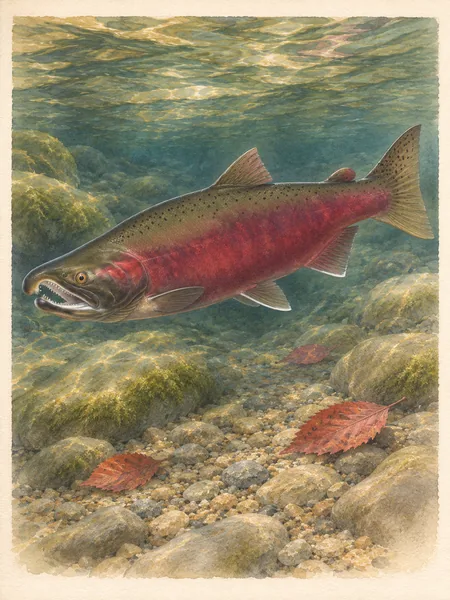
Pacific salmon
The salmon of small forest streams
Read the profile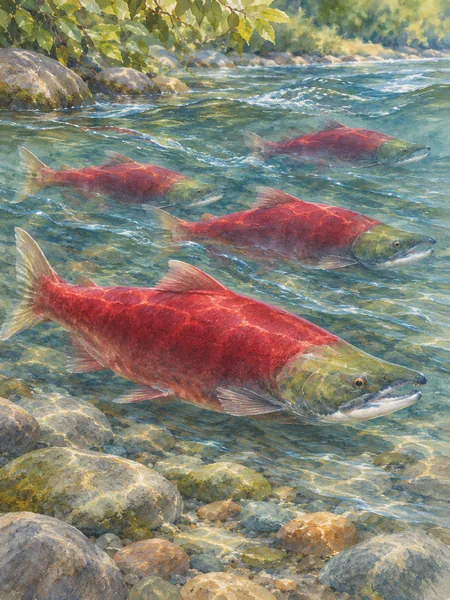
Pacific salmon
From ocean silver to river scarlet
Read the profile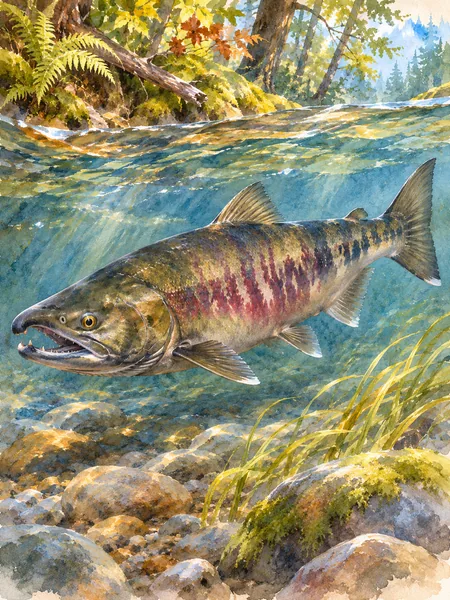
Pacific salmon
A river run in autumn colour
Read the profile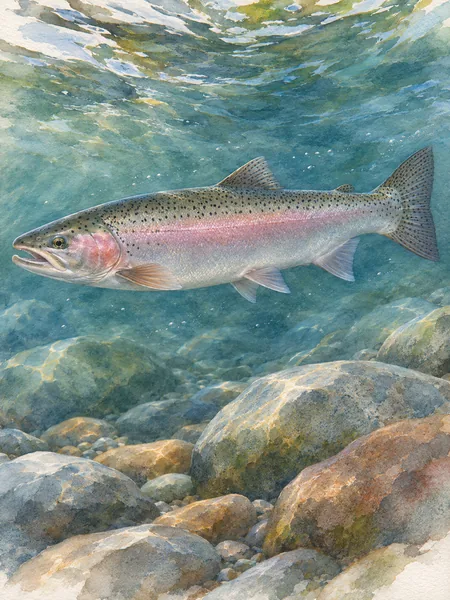
Sea-run trout
The river traveller that may return again
Read the profile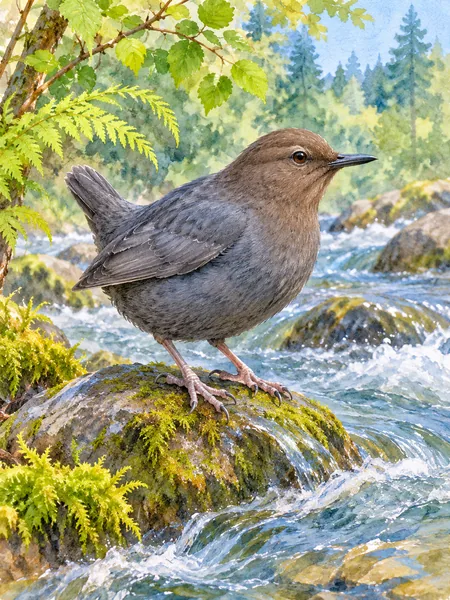
Songbird
A singer of rapids in the whitewater
Read the profile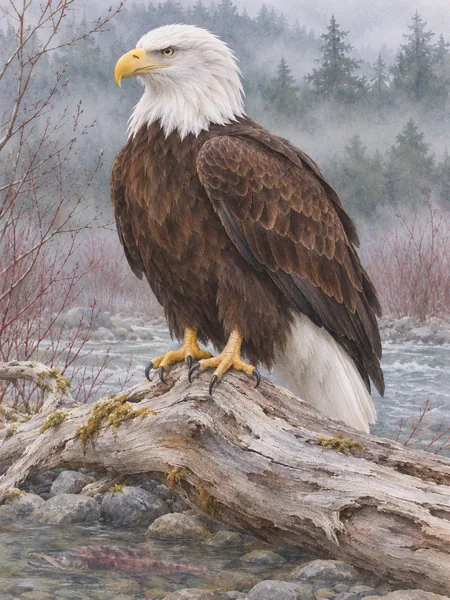
Bird of prey
Watcher of the salmon river
Read the profile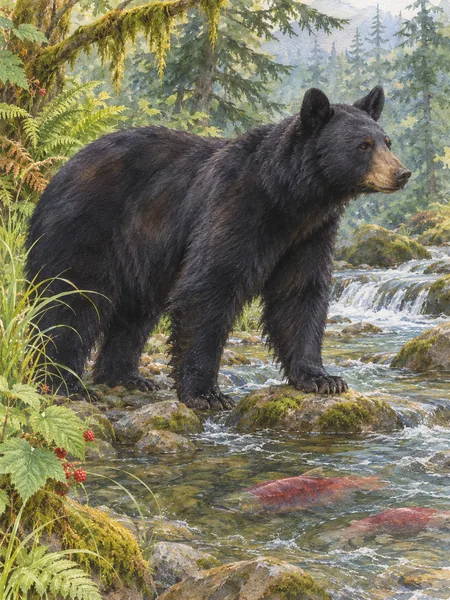
Mammal
A salmon run carried into the forest
Read the profile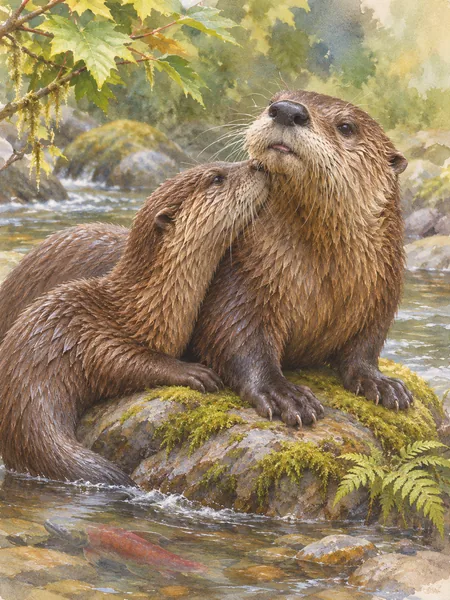
Mammal
The swimmer between stream and shore
Read the profile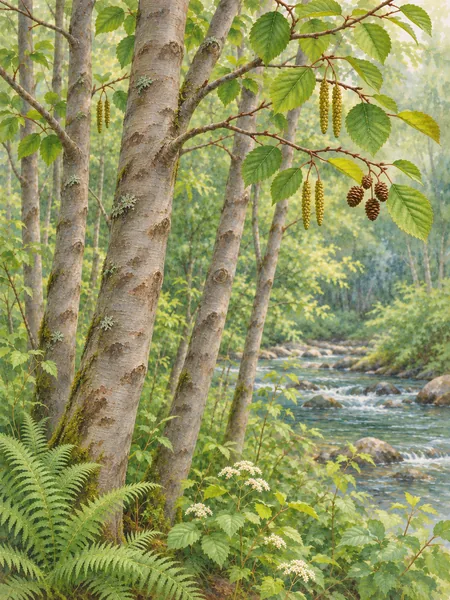
Tree
A streamside tree that gives back
Read the profile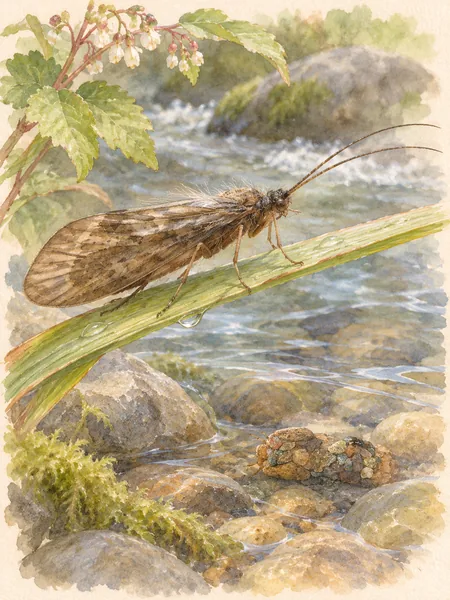
Aquatic insects
Underwater architects of the salmon stream
Read the profileOptional prints and gifts featuring AI-generated digital watercolours, carefully art-directed and reviewed. About our process.